
.png?width=1800&height=1200&name=Kitchen%20Cabinet%20Types%20Explained_%20Stock%2c%20Semi-Custom%2c%20and%20Custom%20Cabinets%20(3).png)
When planning a kitchen remodel, bathroom remodel, or built-in storage project, cabinetry is one of the biggest decisions homeowners will make. Cabinets affect not only the look of the space, but also the budget, timeline, storage, and overall functionality.
The three basic types of cabinetry are stock, semi-custom, and custom. Each option has its own advantages, limitations, and price point. Understanding the difference can help homeowners choose the best fit for their needs, style, and budget.
Stock Cabinetry
Stock cabinetry is the most basic and budget-friendly cabinet option. These cabinets are pre-made in standard sizes, styles, and finishes. Because they are mass-produced, they are usually available faster than other cabinet types.
Stock cabinets are a good choice for homeowners who want a simple, cost-effective option and do not need many design modifications.
Pros:
Stock cabinets are typically the most affordable option. They also have a shorter lead time, making them a practical choice for projects with a tighter schedule.
Cons:
The biggest limitation is flexibility. Since stock cabinets come in standard sizes and finishes, homeowners have fewer choices when it comes to layout, color, materials, and storage features. They may also be made with lower-quality materials, so they are not always as durable as semi-custom or custom cabinets.
Semi-Custom Cabinetry
Semi-custom cabinetry offers more flexibility than stock cabinetry while still being more affordable than fully custom cabinets. These cabinets start with standard cabinet sizes, but allow for some modifications.
Homeowners may be able to adjust certain dimensions, choose from more door styles, select different finishes, and add organizational features.
Pros:
Semi-custom cabinets offer a strong balance between price, design flexibility, and quality. They allow homeowners to personalize their space without the higher cost of fully custom cabinetry.
Cons:
Semi-custom cabinetry usually costs more than stock cabinets and may take longer to arrive. While there are more options available, there are still limits to how much the cabinets can be modified.
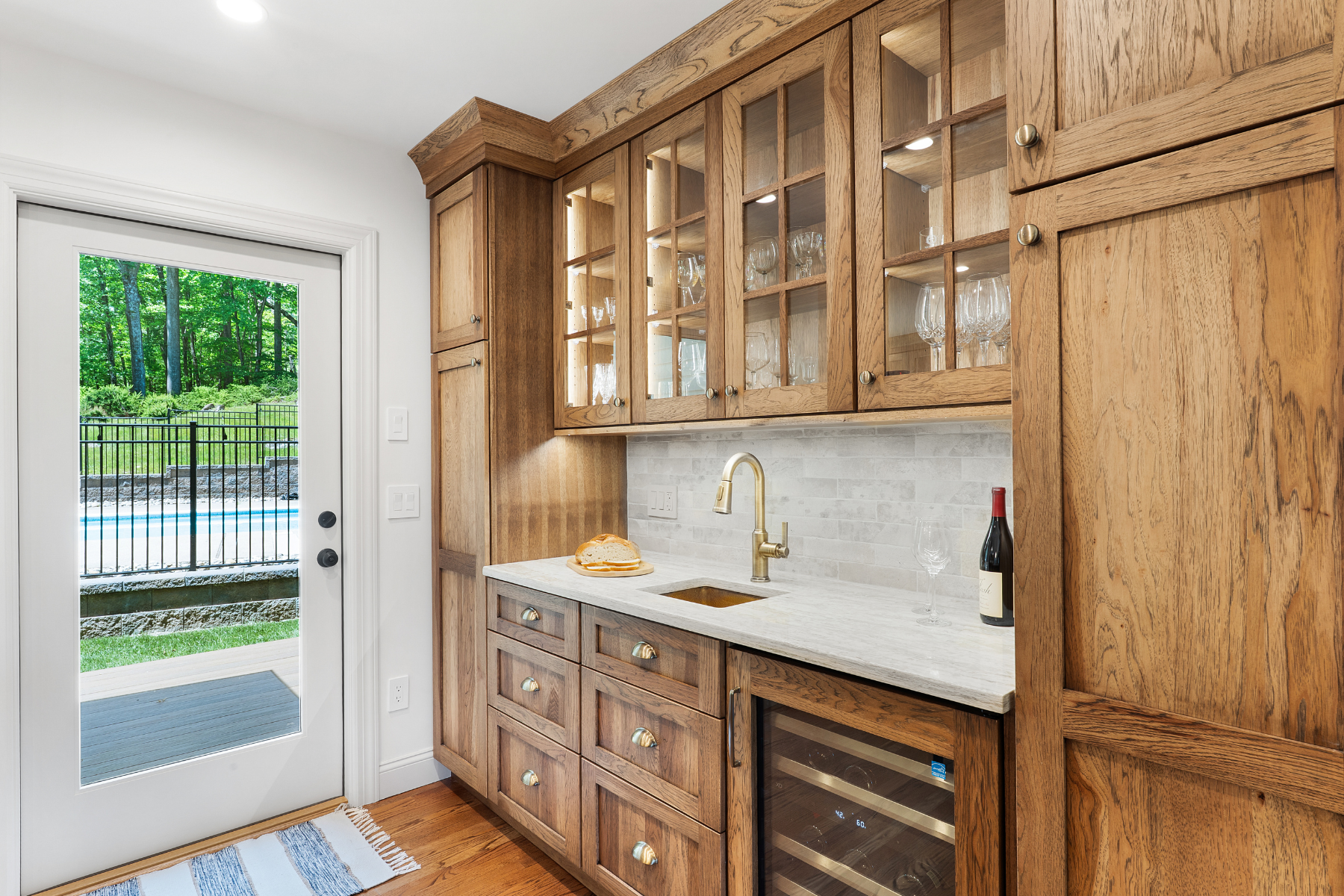
Custom Cabinetry
Custom cabinetry is built specifically for the homeowner’s space, style, and storage needs. Every detail can be designed to fit the project, from cabinet size and layout to materials, finishes, inserts, and special features.
Custom cabinets are ideal for homeowners who want a completely personalized look or need cabinetry for a unique space.
Pros:
Custom cabinetry offers the highest level of flexibility. It allows homeowners to maximize storage, solve layout challenges, and create a one-of-a-kind design.
Cons:
Custom cabinets are usually the most expensive option and often require the longest lead time. Because they are made to order, they require more planning and a larger investment.
Which Cabinet Type Is Right for You?
The right cabinetry depends on your budget, timeline, and design goals.
Stock cabinetry may be best if you want a more affordable option with a faster turnaround. Semi-custom cabinetry may be the right choice if you want more design options without going fully custom. Custom cabinetry may be the best fit if you want complete flexibility and a design tailored specifically to your home.
No matter which option you choose, cabinetry plays a major role in how your space looks, feels, and functions. Working with an experienced remodeling team can help you compare your options and choose cabinetry that supports both your style and your everyday needs.
Three Main Cabinet Categories
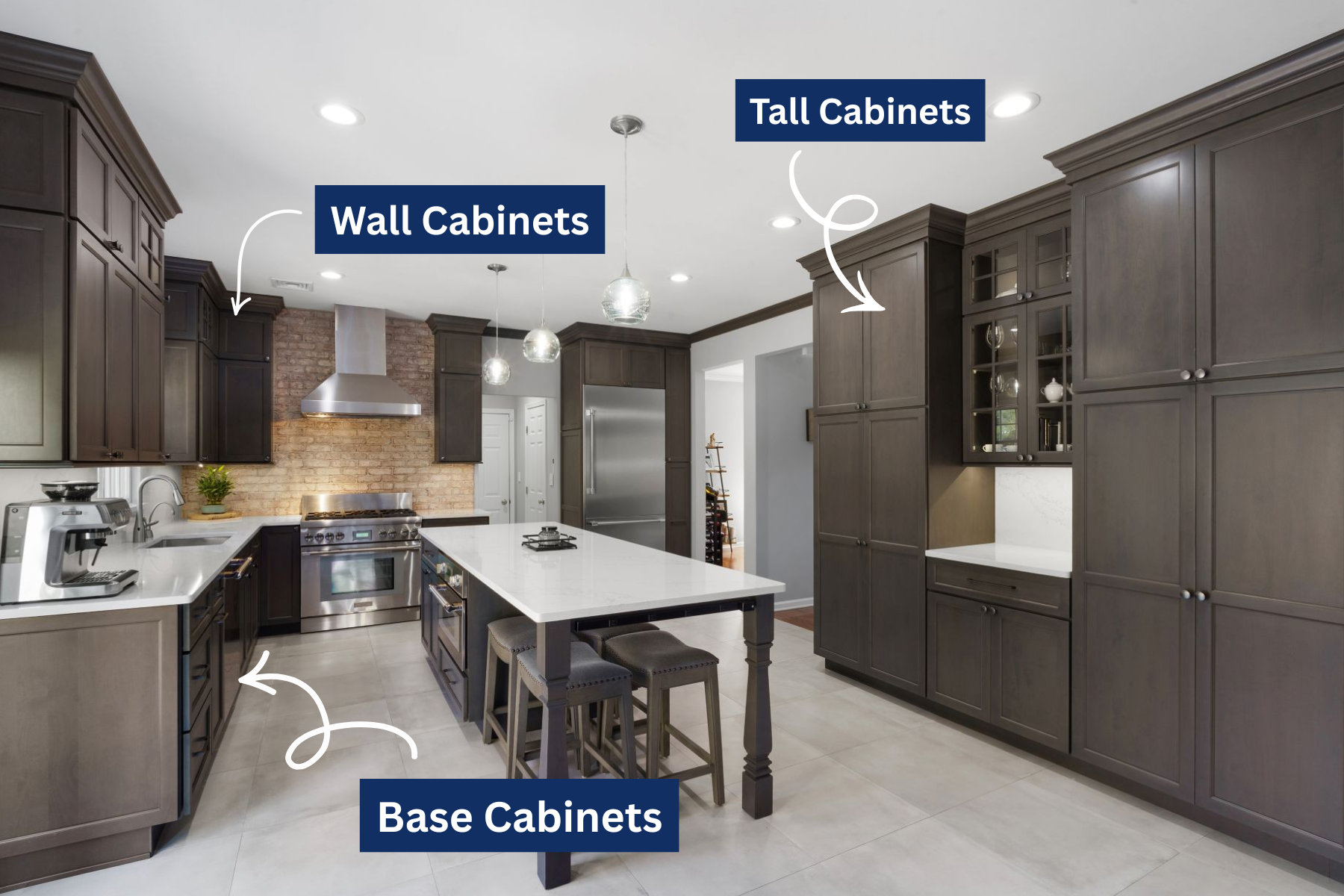
In addition to choosing between stock, semi-custom, and custom cabinetry, homeowners should also understand the three primary cabinet categories used in most kitchen designs: base cabinets, wall cabinets, and tall cabinets. Each serves a different purpose and plays an important role in both storage and functionality.
Base Cabinets
Base cabinets sit directly on the floor and serve as the foundation of the kitchen. Countertops are installed on top of these cabinets, making them one of the most heavily used storage areas in the home.
Base cabinets are commonly used to store cookware, dishes, small appliances, and pantry items. They can also include specialty features such as pull-out shelves, deep drawers, trash pull-outs, and corner storage solutions.
Wall Cabinets
Wall cabinets are mounted on the wall above countertops and provide convenient, easy-to-access storage. These cabinets are ideal for storing everyday dishes, glassware, spices, and other frequently used items.
Wall cabinets come in a variety of heights and styles and can extend all the way to the ceiling for a more custom, high-end appearance while maximizing storage space.
Tall Cabinets
Tall cabinets extend from the floor to near the ceiling and provide substantial storage capacity. These cabinets are often used as pantry cabinets, broom closets, appliance garages, or integrated refrigerator surrounds.
Because of their size, tall cabinets help maximize vertical storage and are especially useful in kitchens where homeowners need additional space for food storage, cleaning supplies, or small appliances.
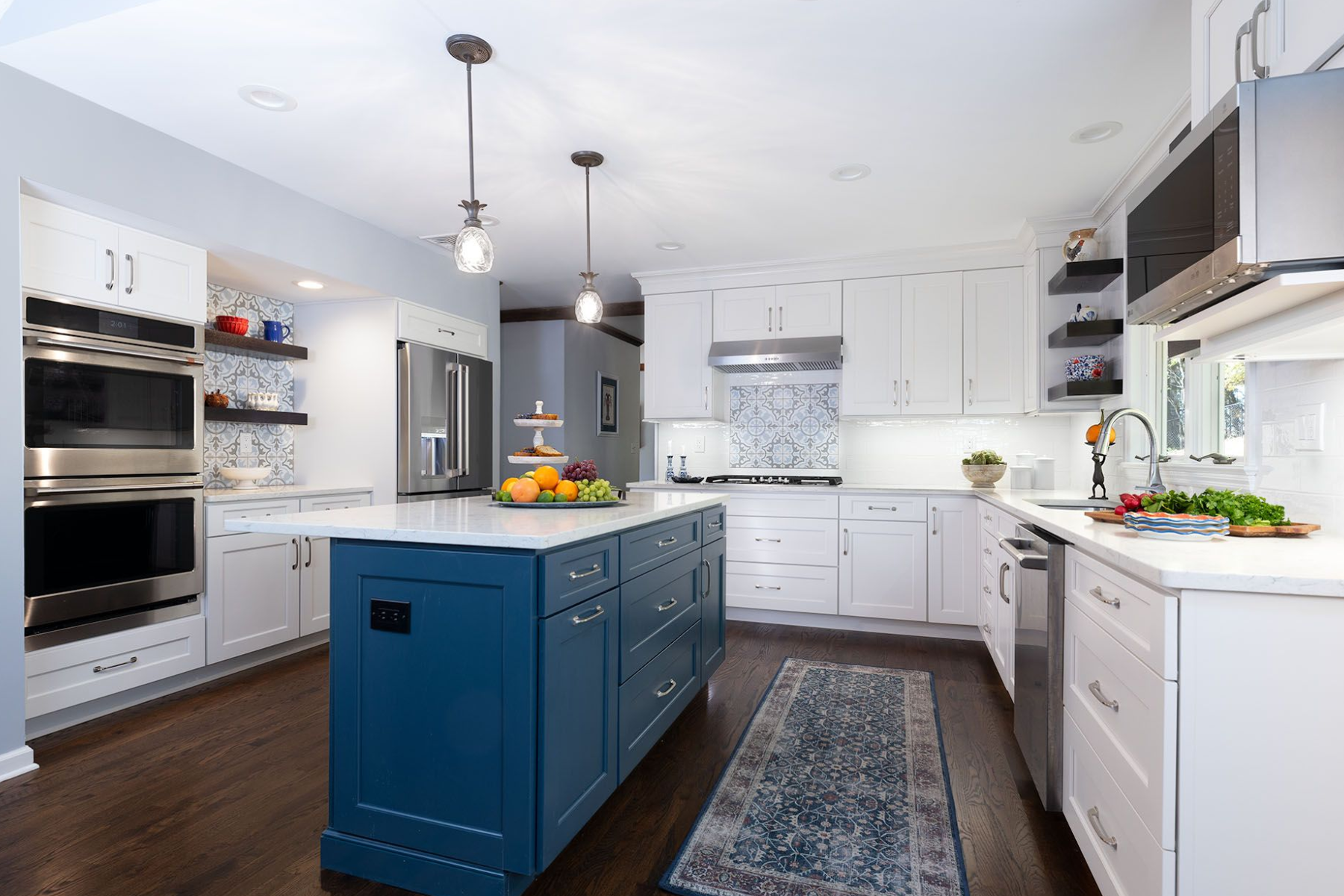
Creating a Functional Kitchen Design
A well-designed kitchen typically incorporates all three cabinet types. Base cabinets provide functional workspaces and storage, wall cabinets keep everyday essentials within reach, and tall cabinets offer larger storage solutions. Together, they create a balanced kitchen design that is both beautiful and practical for everyday living.
Bring Your Dream Kitchen to Life with JMC Design Build Remodel
Cabinetry plays a major role in the appearance, organization, and functionality of your kitchen. Understanding the differences between stock, semi-custom, and custom cabinetry can help you make informed decisions that align with your goals, budget, and lifestyle.
At JMC Design Build Remodel, we help North Jersey homeowners create kitchens that are tailored to the way they live. Our design-build team works closely with each client to develop thoughtful layouts, select quality materials, and maximize storage while maintaining a cohesive design.
If you're planning a kitchen remodel, JMC Design Build Remodel is here to provide expert guidance, innovative design solutions, and craftsmanship you can trust. Contact our team today to start the conversation and take the next step toward your dream kitchen.
.png?width=1800&height=1200&name=Kitchen%20Cabinet%20Types%20Explained_%20Stock%2c%20Semi-Custom%2c%20and%20Custom%20Cabinets%20(2).png)
Frequently Asked Questions About Kitchen Cabinets
What is the difference between stock, semi-custom, and custom cabinets?
Stock cabinets are pre-manufactured in standard sizes and finishes with limited customization options. Semi-custom cabinets offer more flexibility in sizing, finishes, and storage features. Custom cabinets are built specifically for your space and can be fully personalized to meet your design and storage needs.
Are custom cabinets worth the extra cost?
Custom cabinets can be a worthwhile investment for homeowners who want a unique design, specialized storage solutions, or cabinetry tailored to an unusual layout. They offer the highest level of customization but typically come with a higher price tag and longer lead times.
How much do new kitchen cabinets cost?
Cabinet costs vary widely based on the type, size of the kitchen, materials, and level of customization. Stock cabinets are generally the most affordable option, while custom cabinetry represents the highest investment.
How long does it take to get kitchen cabinets?
Lead times vary depending on the cabinet type. Stock cabinets are often available within days or weeks, semi-custom cabinets may take several weeks, and custom cabinetry can take months depending on the design and manufacturing process.
How do I choose the right cabinets for my kitchen?
Start by considering your budget, storage needs, design style, and project timeline. Working with a professional designer can help you compare options and select cabinetry that complements both your home and your lifestyle.


